World Building: High Fashion Through the Ages

The Emperor Has Clothes, and They are Ridiculous

The wonderful absurdity of fashion is not a new phenomenon either, as witnessed by the bizarre confections of silk and wool dreamed up by renaissance tailors in Italy. Collars of any era are likely to have a high absurdity factor—think of the Virgin Queen, or John Travolta’s character in Saturday Night Fever.  Shoes are also common offenders, and hairstyles.

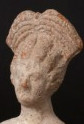
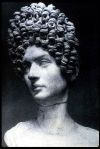
Recently I viewed a Roman tomb that captured in stone a noblewoman’s hairstyle from the decade she died, which appeared to be a mass of tight curls piled in what can be only be described as a cross between a beehive with a radar dish.

Wonderful article, by the way, in which a hair dresser plays archeologist to explain how these crazy roman hairdoos defied gravity:

http://www.huffingtonpost.com/2013/03/22/ancient-roman-hair-janet-stephens_n_2925152.html


Filtering Setting Through Character Point of View

Third Person Limited

Third person limited (TPL) is one of the most common POVs these days. TPL means we the readers are passengers in the POV character’s mind, limited to what he or she notices and thinks. If the character doesn’t see the orc creeping up behind them, the reader doesn’t get to, either.Since the character couldn’t know what the orc is thinking, the reader doesn’t get to, either.

Third Person Omniscient (or, Third Person Unlimited)

In “third person omniscient” (TPO) we would not be limited to the character’s knowledge; the narrator is omniscient, and can get inside anyone’s head. We get to find out what the stalking orc is feeling, what his victim is thinking right before the attack, and even the hidden metal armor the character is wearing under his shirt. TPO was a common POV back in the day, but these days it’s fairly rare.

Third Person Limited also Limits What a Character Would Notice

For instance, if a character has lived on a street all his or her life, she probably won’t even notice any more how it is laid out. So the reader doesn’t get to know either.

Sample

Bob paused in the shadow of the alley behind the inn, waiting for the fat man with the fatter purse to exit the bar and stumble by.  Across the river the Knarlytooth mountains rose to 8000 feet, glacially carved into spectacular spires of granite and dolomite. 

Seriously?  Why the hell would Bob pause to think about the geology of the mountains across the water?  Answer:  he wouldn’t!  So the reader doesn’t get to, either.

The only way we get to learn about the mountains is if the mountains were somehow relevant to Bob in that scene–like, say, the moon was about to rise from behind them and reveal his position–then he’s worried about them, and so we get to see them.  It might go like this:

Bob paused in the shadow of the alley behind the inn, waiting for the fat man with the fatter purse to exit the bar and stumble by.  He glanced over his shoulder at the jagged peaks of the Knarleytooth mountains, the granite spires backlit with the rising moon. Two minutes, maybe less, he judged, before the moon cleared the lowest pass and illuminated the streets. He bit off a curse and returned his attention to the inn. If his mark didn’t show soon, he’d have to give it up.

Conclusion

The rule here is this filter your world details through the point-of-view character. Make the world details matter to the action/concerns at hand.

World Building: Fashion

Trial and Error

Soon after reading Neutron Star for the first time, one of my students appeared with an asymmetric beard, and it actually looked pretty cool.  He had very thick facial hair, so he could do extremely precise designs in it; I imagine sparse beards would not look so good.   In any case, Niven’s use of the asymmetric beard got me thinking of the wonderful absurdity of fashions when viewed across cultures (or even within cultures).

Universal Absurdity

No era is immune to this absurdity.  As evidence, I submit to you the saggy ass-pants of teen culture.  (Really?  You want to show me your underpants?) Nor is it only sub-cultures who are guilty, as anyone can tell you who has picked up their high school yearbook after twenty years away. If you haven’t lived that long and you think your high school yearbook pictures look “bomb,” just you wait.  You’ll cringe. Or wait until you show them to your kids.  “Mommy, what was wrong with your hair?”

Yours Truly

Exhibit two, my sophomore tolo picture.  That’s right.  I’m wearing a brown tuxedo with brown-accents on the ruffled shirt and cuffs.  Eat your heart out.

Worldbuilding: Fashion & the Mirror of Speculative Fiction

Larry Niven wrote a wonderful book called Neutron Star, which I love to read now and again. The book is a series of loosely related short stories in which he lays out the universe he would later use for Ringworld.  In one of the stories, he describes a character as having an “asymmetric beard” that was fashionable on his planet. Niven never gives us any more description than that—part of the genius of his story telling—and as a result my imagination conjured up all kinds of wild facial designs and effects, each on the face of a man confident that he looks good. 

At the time, I had never seen or imagined an asymmetric beard, so the idea tickled me.  It especially tickled me that Niven’s character considered his lopsided facial hair to be totally ordinary, even attractive, and it made me think how many things I wear that might be just as whimsical to an outsider.

This is one of the reasons we read fantasy and science fiction—to have the mirror held up to ourselves, a new glass in which to see our own assumptions and behaviors in a new way.


Filtering Details of Setting Through Character Point of View

Bob paused in the shadow of the alley behind the inn, waiting for the fat man with the fatter purse to exit the bar and stumble by.  Across the river the Knarlytooth mountains rose to 8000 feet, glacially carved into spectacular spires of granite and dolomite. 

Seriously?  Why the hell would Bob pause to think about the geology of the mountains across the water?  Answer:  he wouldn’t!  So we don’t get to, either.  This POV is called “third person limited” and is the most common these days.  TPL means we the readers are passengers in the POV character’s mind, limited to what he notices.  In “third person omniscient” we would not be limited to his knowledge, but that POV is fairly rare these days.

The only way we get to learn about the mountains is if the mountains were somehow relevant to Bob in that scene–like, say, the moon was about to rise from behind them and reveal his position–then he’s worried about them, and so we get to see them.  It might go like this:

Bob paused in the shadow of the alley behind the inn, waiting for the fat man with the fatter purse to exit the bar and stumble by.  He glanced over his shoulder at the jagged peaks of the Knarleytooth mountains, the broken spires backlit with the rising moon. Two minutes, maybe less, he judged, before the moon cleared the lowest pass and illuminated the alley. He stifled a curse and turned his attention back to the inn. If his mark didn’t show soon, he’d have to give it up.

The rule here is this:  filter your world details through the point-of-view character. We the readers only get to see/experience what the POV character would notice.

Michael Swanwick does this masterfully in Stations of the Tide. Check out this passage from the first chapter. In it, the protagonist, known only as “the bureaucrat,” is of on a space ship, skimming over the surface of distant planet on a mission for his department.

“Smell the air,” Korda’s surrogate said.

The bureaucrat sniffed… “Could use a cleansing, I suppose.”

“You have no romance in your soul.” The surrogate leaned against the windowsill, straight-armed, looking like a sentimental skeleton. the flickering image of Korda’s face reflected palely in the glass. “I’d give anything to be down here in your place.”

That’s all you get for the explanation of what the hell a surrogate is, or who Korda is, because we are experiencing this passage through the bureaucrat’s POV, and to him a surrogate’s as common as a cordless phone to us, and he knows Korda well.  The bureaucrat will neither pause to reflect on the marvel of surrogate technology for our benefit, nor on his relationship with Korda, both of which he takes for granted; we are therefore left to piece it all together through his perspective as the story unfolds.

Their dialogue stretches over four pages, and it’s pretty easy to figure out that Korda is his boss, but we only get one small clue on each page as to what a surrogate is. Here are the clues, excerpted from the action of the dialogue.

…”Korda moved away from the window, bent to pick up an empty candy dish, and glanced at its underside. There was a fussy nervousness to his motions strange to one who had actually met him.  Korda in person was heavy and lethargic.  Surrogation seemed to bring out a submerged persona, an overfastidious little man normally kept drowned in flesh.”

…”The surrogate reopened the writing desk, removed a television set, and switched it on.”

…”They shook hands, and Korda’s face vanished from the surrogate. On automatic, the device returned itself to storage.”

In the end, I’ve pieced something together about this wonderful piece of worldbuilding known as the surrogate, and what I come up with is pretty damned cool. But Swanwick never explains it to us. He sticks religiously to what his POV would notice about the situation.

In the end, this sort of writing relies on me to do some of the lifting, and I dig that. It’s a big reason I buy everything he writes. There aren’t a lot of writers who do it as well as he does, and if I ever do it half as well I’ll be pretty damned proud of it.

World Building: You Are Building an Iceberg

Though I create a complex world in which my characters live, my readers only encounter a fraction of what I know of it. Only the tip of the iceberg is experienced by the readers, and that’s good!  The action would be smothered in exposition if the whole iceberg were hauled out onto the page.

I learned this the hard way, burying the action in my stories with details of setting.  The general rule I eventually came up with is this:  Reveal only as much information as is absolutely necessary for the reader to understand the action at hand

The best example of this sort of narrative economy I’ve ever read is in Michael Swanwick’s Stations of the Tide, for which he deservedly won the 1991 Nebula for best novel.  In fact, the economy is so severe in that novel that at times I felt my head spinning.  (What the hell’s a surrogate?  He doesn’t explain it. He just names it and moves on!)  And I enjoy that as a reader: he doesn’t hold my hand, he makes me work.

All the same, that kind of economy is probably why it won the Nebula, which is voted in by fantasy/scifi authors, rather than a Hugo, which is voted in by fans.

World Building: Songs

World Building:  Songs

Every culture has oral tradition, and before easy TV entertainment it was vitally important for entertainment and sharing ideas. Tolkien understood this, and peppered his work with everything from hobbit folk songs to elvish high poetry.

I don’t advocate lots of elvish poetry; many readers don’t have the patience for elvish epics any more.  But a few touches of oral culture lend authenticity and depth to an imagined world.

Example pending:


Worldbuilding: Ballads

To create the impression of rich literary culture you needn’t write whole epics; all it takes is a recited verse here and there.  Here’s one from a bawdy ballad about a once favored knight:

In all his battles, all his fields,

Sir Willard proved the best.

He served the queen,

(But then her maid),

And never more was blessed.

                                                               —From “Black Armor Becomes Him,” Arkendian ballad circa early reign of Evandora

Worldbuilding: Children’s Rhymes

Some of the best fun to be had is in making children’s rhymes for your oral culture. Children’s rhymes also have the virtue of being short, so they are easy to fit in here or there. I used the following rhyme in The Jack of Souls to help illustrate the harshness of the world and its three-moon mythos:

Red Moon, White Moon, full in the sky,

Red like a witch’s evil eye.

Black eats White,

And leaves the Red.

Krato’s Moon!  We’ll all be dead!


                                                               —Arkendian children’s rhyme portraying the

                                                                   Eclipse of the Bright Mother by the Unseen

                                                                   Moon; Arkendians call it Krato’s Moon.